Markets
Surat and Antwerp Solve Different Problems

Surat and Antwerp Solve Different Problems
Date
16.02.2026
Author
The Diamond Trade Desk
Read Time
12 min
Share
The industry frames Surat and Antwerp as competing diamond capitals. They are not. One is a manufacturing engine. The other is a pricing and compliance gateway. Understanding what each hub actually solves clarifies where value and risk sit in the global supply chain.
The Comparison That Misleads
Every year, industry panels, trade publications, and conference stages repeat the same framing: Surat versus Antwerp. One is supposedly rising while the other declines. The subtext is competition: that one will eventually displace the other.
This framing is not just imprecise. It is structurally wrong. Surat and Antwerp do not occupy the same position in the diamond pipeline. They never have. Surat processes stones. Antwerp prices, sorts, and validates them. The first is an industrial operation. The second is a market-making function. Treating them as substitutes distorts the risk assessment for anyone operating across the supply chain: particularly B2B diamond buyers sourcing polished or rough goods at scale.
What follows is a structural breakdown of what each hub actually does, why it does it, and what that means for B2B diamond professionals who need to make sourcing, compliance, and investment decisions with clarity rather than sentiment.
What Surat Actually Solves: Volume Manufacturing at Scale
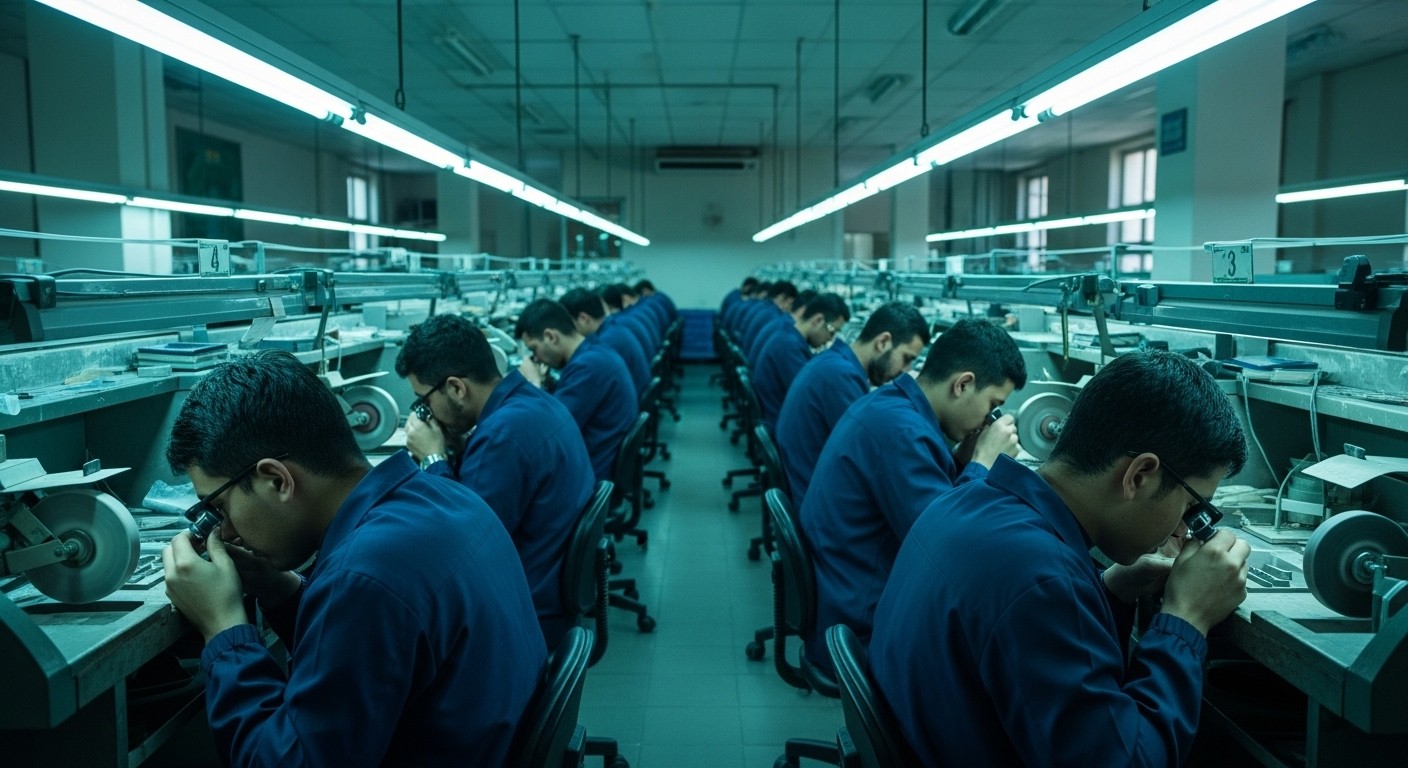
Surat processes approximately 90% of the world's diamonds by volume. This is a manufacturing statistic, not a trading one. The city's 6,000-plus polishing units employ roughly 700,000 workers, transforming rough stones into polished goods across every carat size and cut category. Round brilliants account for approximately 65% of total output. The remaining volume is distributed across princess, emerald, cushion, and fancy shapes.
The economic model here is scale. Surat developed its dominance not through resource access but through labor economics, intergenerational skill transfer, and manufacturing density. Patel and Jain community networks created vertically integrated operations where rough procurement, cutting, polishing, and quality control exist within closely held family structures. Trust systems such as angadia couriers and chittis (informal promissory notes) still underpin daily operations, enabling transaction velocity that formal banking systems cannot match.
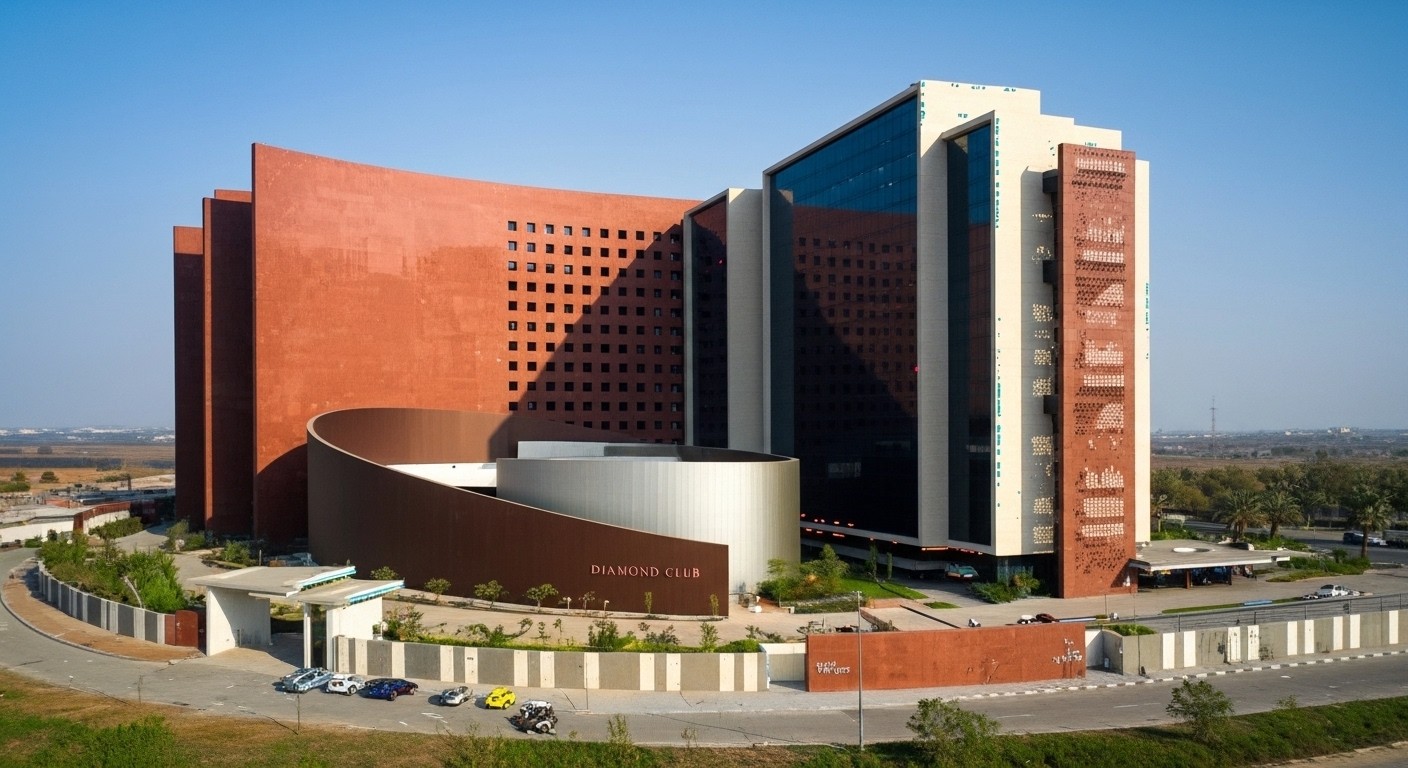
Surat's infrastructure has invested heavily in this identity. The Surat Diamond Bourse, inaugurated in December 2023, is the world's largest office building at 660,000 square meters, eclipsing the Pentagon. It was conceived as an anchor for vertical integration; customs clearance, trading, and export under a single roof. However, adoption has been slower than projected. As of late 2025, only a fraction of the 4,200 available offices had commenced operations, and key early movers relocated back to the Bharat Diamond Bourse in Mumbai, citing connectivity and market proximity issues.
The challenge Surat faces is not capability, it is dependency. India imports 100% of its rough diamond supply and exports 95% of its polished output, with only 5% consumed domestically. This creates structural exposure to external shocks, precisely the kind that arrived in 2024 with G7 sanctions on Russian-origin diamonds, which previously constituted approximately 29% of global natural rough supply.
The Lab-Grown Pivot: Manufacturing Adapts
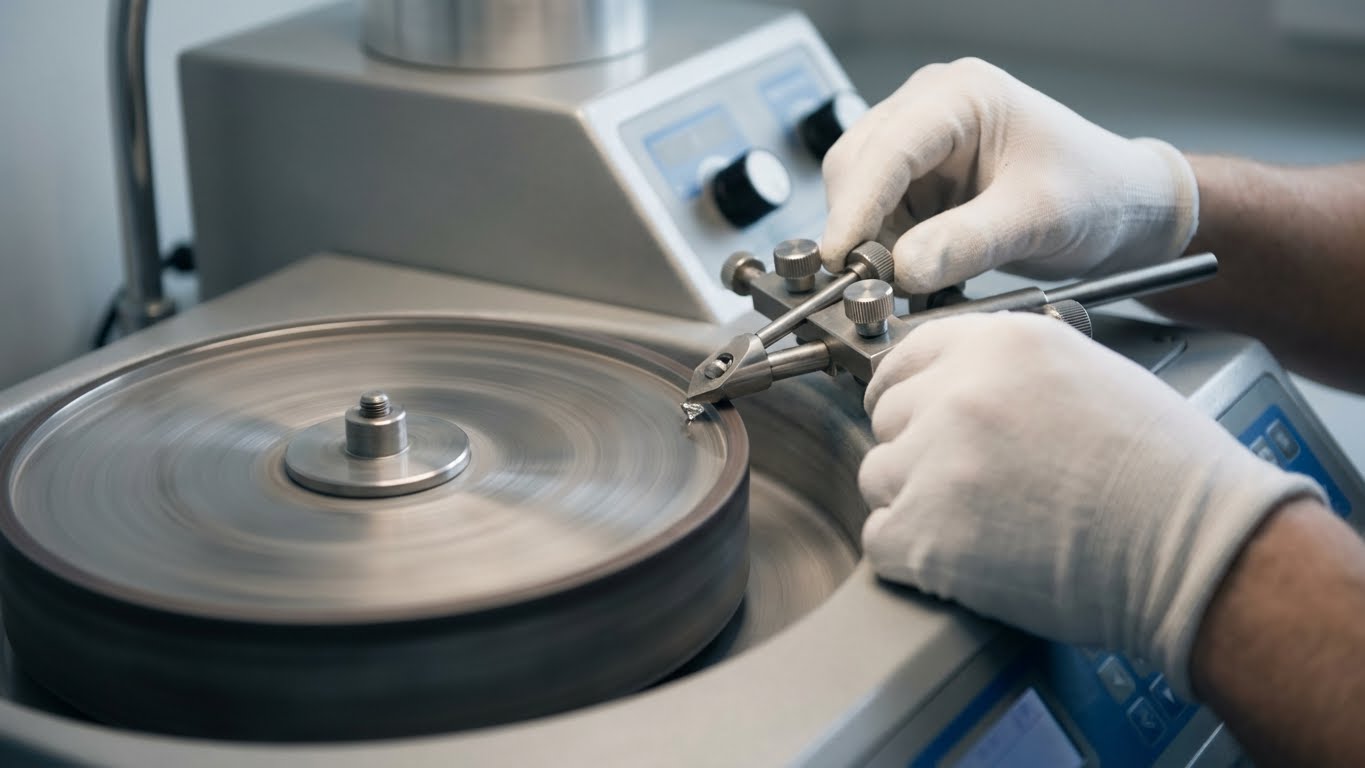
On the lab-grown side, Surat has adapted rapidly. Manufacturing units producing lab-grown diamonds expanded from roughly 800 to 2,000 facilities between 2023 and 2025, a 150% increase as traditional processors diversified their operations. This expansion has transformed Surat into the global center for lab-grown diamond jewelry manufacturing, with capabilities spanning the full production chain from CVD and HPHT stone growth through to cutting, polishing, and setting.
But the economics are different, lab-grown stones command approximately 10% of natural diamond values, generating volume without corresponding revenue density. What Surat offers is manufacturing flexibility and scale that no other hub can match. For international B2B diamond buyers seeking custom diamond jewelry manufacturing whether bespoke engagement rings, fashion pieces, or white-label collections, Surat's infrastructure provides end-to-end capability at price points that Western facilities cannot approach.
The city's diamond jewelry manufacturing ecosystem serves everyone from independent retailers commissioning signature collections to global fashion brands requiring private-label production at scale. Workshops that spent decades perfecting natural diamond craftsmanship have transferred those skills seamlessly to lab-grown production, offering the same precision cutting and setting work at dramatically lower input costs.
For B2B diamond operators, this means Surat offers unmatched breadth across both natural and lab-grown segments. The city's workshops handle everything from mass-market melee to custom high-jewelry commissions. The risk profile, however, has shifted: operators must now navigate both the natural diamond sanctions landscape and the rapidly compressing margins in lab-grown production.

What Antwerp Actually Solves: Price Discovery, Compliance, and Trust Infrastructure
Antwerp's diamond trade dates to 1447. Nearly 580 years later, roughly 1,470 diamond companies operate within a compact area adjacent to Antwerp Central station, a district historically responsible for handling 84% of the world's rough diamond flow. But the city's role is not manufacturing, it is institutional.
Antwerp provides three functions that no other hub replicates at comparable depth: sorting and valuation of heterogeneous rough, compliance grade documentation, and market-making through critical mass of buyers and sellers.
The sorting function is critical and under-discussed. When rough diamonds arrive from mines, known as "run of mine" production, they are not uniform. Each parcel is a mix of sizes, shapes, clarities, and colors. The skill of sorting and valuating this heterogeneous inventory is highly specialized, and it is exactly the kind of work that cannot be commoditized through manufacturing scale. Antwerp's workforce has built this expertise over generations. It is the reason why every major mining company, from De Beers to Alrosa (pre-sanctions), shipped directly to Antwerp.
On the compliance side, Antwerp occupies a uniquely regulated position. The Diamond Office (Antwerp) is Belgium's sole customs authority authorized to process diamond imports and exports. In 2024 more than 75,000 diamond shipments passed through with total volume of over 225 million carats. Companies operating in Antwerp are subject to rigorous European anti-money laundering legislation, mandatory customer screening, annual compliance reporting, and regular audits. This regulatory density is expensive. It is also precisely why global luxury brands, institutional B2B diamond buyers, and downstream retailers choose Antwerp as a sourcing origin.
The city's relationship to lab grown diamonds further clarifies its positioning. In June 2025, HRD Antwerp, one of the world's leading diamond laboratories became the first lab globally to cease certifying loose synthetic diamonds, focusing exclusively on natural stones. Antwerp's trade data reflects this, synthetics represented just 0.37% of 2025 trade volume. This is not an oversight, it is a strategic decision rooted in the economics of what Antwerp actually does.
The Structural Comparison
Dimension | Surat | Antwerp |
|---|---|---|
Core function | Cutting, polishing, and manufacturing at volume (natural + lab-grown) | Rough sorting, valuation, price discovery, and compliance |
Workforce | 700,000 diamond workers across 6,000+ units | 3,500 direct; 30,000 including ancillary services |
Competitive edge | Labor cost, skill density, manufacturing speed, diamond jewelry manufacturing capacity | Regulatory trust, sorting expertise, buyer-seller critical mass |
Key risk | 100% rough import dependency; sanctions exposure; lab-grown margin compression | Loss of 35% rough supply (Russian sanctions); trade volume decline |
Primary value | Cost-efficient transformation of rough to polished; full-chain manufacturing | Institutional trust, documentation, and market access |
How the Sanctions Landscape Reshapes Both Hubs
The G7 sanctions on Russian-origin diamonds, which took initial effect in January 2024 and will enter mandatory traceability enforcement in January 2026, have hit both hubs but through different mechanisms.
For Antwerp, the impact was a direct supply loss. Prior to sanctions, approximately one-third of Antwerp's rough diamond imports originated from Russia. Since January 2024, Russian diamonds have been banned from Antwerp entirely. The consequence was immediate: total rough imports fell 35% in 2024. Total trade value dropped from $32.5 billion in 2023 to $24.5 billion in 2024 and further to $19.1 billion in 2025. Antwerp has also been central to designing the enforcement mechanism. As the designated G7 verification authority for rough diamonds, all G7-certified stones pass through Belgian customs.
For Surat, the impact arrived indirectly. Russian rough diamonds that previously entered via Antwerp has been rerouted to markets such as India and Dubai, where sanctions do not apply in the same form. This has created a complex situation, while the physical supply of rough diamonds continues to reach Indian manufacturers, the downstream ability to sell polished goods derived from rough diamonds into G7 consumer markets, particularly the US and EU, faces growing traceability requirements.
The forthcoming traceability mechanism will require diamond companies to demonstrate non-Russian origin through validated systems for all diamonds of 0.5 carats or larger. For B2B diamond operators, this means the documentation layer, the function Antwerp has built its reputation on becomes more valuable, not less, even as the physical trade volumes decline.
What This Means for B2B Diamond Operators
The practical implications for B2B diamond buyers, suppliers, and intermediaries operating across both hubs are structural, not seasonal.
Sourcing decisions should match function. If you need polished goods at volume, particularly in sub-carat sizes, round brilliants, or lab-grown diamonds; Surat remains the global default for B2B diamond supply. The manufacturing infrastructure is unparalleled, and pricing is competitive precisely because of the scale economics. If you need compliance-grade documentation, rough sorting, high-value stone certification, or direct access to mining company inventory, Antwerp is the infrastructure layer you cannot substitute.
Traceability is no longer optional. From January 2026, the G7 traceability mechanism enters mandatory enforcement for all natural, non-industrial diamonds of 0.5 carats or more entering the EU. B2B diamond operators sourcing from Surat for G7 consumer markets will need validated supply chain documentation. This does not favor one hub over the other. It creates an interconnection requirement, manufacturing in Surat, documentation through Antwerp (or equivalent G7-verified channels).
The lab-grown segment operates on a different cost curve entirely. Wholesale prices for lab-grown diamonds have fallen approximately 96% from their 2018 peak, stabilizing near $168 per carat for 1-carat stones by early 2025. Lab-grown diamonds now account for over 45% of US engagement ring purchases. For B2B diamond operators, this is a volume opportunity with compressed margins. Surat is the manufacturing base and for retailers or brands seeking lab grown diamond jewelry manufacturers, Indian facilities offer the only realistic path to scale production at current market prices.
Diamond jewelry manufacturing is particularly well-served by Surat's workshop ecosystem, where decades of bespoke natural diamond work have created artisan networks capable of handling complex commissions at competitive rates. Whether you need a single prototype or 10,000 units of a signature design, custom diamond jewelry manufacturing from Surat delivers production flexibility that vertically integrated Western operations cannot match.
Antwerp has chosen to stand outside this market entirely, a strategic decision that reinforces its positioning around natural diamond expertise and consumer trust.
The Bottom Line
Surat and Antwerp are not competing hubs. They are adjacent functions in a supply chain that requires both physical transformation and institutional verification. Surat turns rough into polished diamonds at a scale no other city can match and has extended this capability to become the world's dominant center for diamond jewelry manufacturing. Antwerp turns rough into priced, sorted, documented, and compliance-verified inventory that the world's luxury market trusts.
The mistake most industry commentary makes is assuming that volume is the only axis that matters. It is not, as sanctions reshape trade flows, as traceability becomes mandatory, and as lab-grown economics diverge further from natural diamond pricing, the institutional infrastructure that Antwerp provides becomes more critical; not less.
For B2B diamond operators, the question is not which hub is better. It is which function you need, at what stage of the pipeline, and what compliance obligations attach to your end market. Whether you are sourcing natural or lab grown diamonds, commissioning diamond jewelry manufacturing, or navigating traceability for G7 markets, the answer depends on matching the hub to the problem.
B2B diamond sourcing is not a single decision, it is a portfolio of relationships across manufacturing, documentation, and market access. Surat gives you production and Antwerp gives you trust. The operators who understand this distinction and build supply chains that leverage both will outperform those still waiting for one hub to "win."
Get that question right, and the sourcing decision makes itself.
The Diamond Trade Desk is a B2B diamond industry publication covering lab grown diamond market trends, natural diamond sourcing, supply chain compliance, and pricing intelligence for jewelers, manufacturers, and brands.
Published by b2b.diamonds - wholesale diamonds + lab grown diamond jewelry manufacturing for brands worldwide.
Share